Key takeaways
- Plan the kitchen first. It sets the hood, grease and utility needs.
- Confirm the roof and duct path before you sign a lease.
- Order long-lead equipment and storefront early.
- Health, fire and building approvals all affect the opening date.
Kitchen and equipment
List your cooking equipment first, because it sets gas, electric, water, drain, hood and makeup air needs. Confirm each utility can reach the space and that the roof and structure can take the equipment and duct.
Check clearances and access for deliveries.
Hood, grease and plumbing
Grease-producing cooking needs a hood, a grease-tight duct, makeup air and often fire suppression. Many restaurants also need a grease interceptor and floor drains. Restrooms must meet fixture counts and accessibility rules.
Cutting a slab for drains takes time, so plan it early.
Dining, bar and finishes
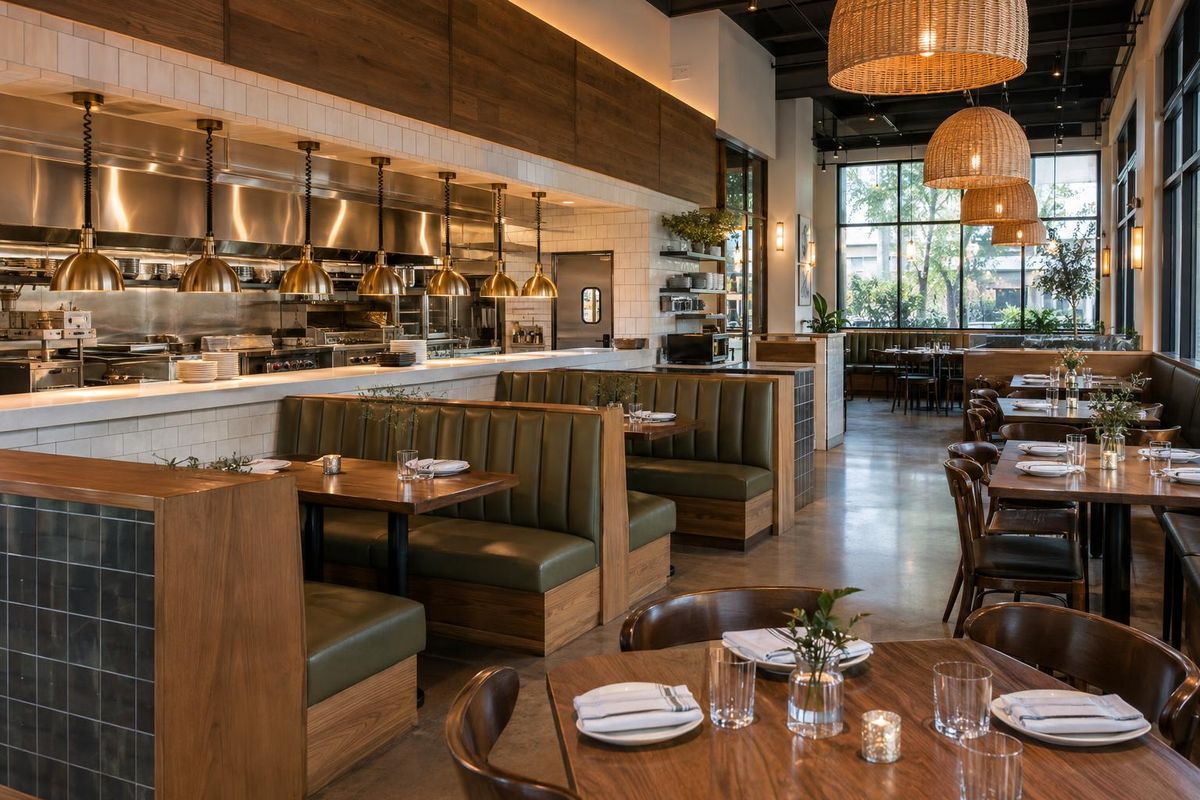
Dining rooms need acoustics, lighting that flatters food, durable flooring and comfortable airflow. Bars add millwork, cold storage, tap lines and power. Storefront glass and signage affect the first impression.
Choose materials that clean easily and hold up to service.
Approvals and opening
Building, fire and health approvals each have their own steps. Schedule inspections in the right order and keep a list of what each one requires. Staff training and equipment delivery also need time before you open.
Add a buffer to your opening date.
Quick answers
How early should I involve a builder?
Before you sign the lease if you can, so the roof, utilities and hood path are checked.
Do all restaurants need a hood?
Those with grease-producing cooking usually do. Check your equipment and local rules.
What delays restaurant openings most?
Equipment lead times, permits and inspection corrections.