Key takeaways
- A work letter says who builds what and who approves it.
- An allowance is usually paid after the work is done and documented.
- Landlord approvals and insurance paperwork take time.
- Read the rent commencement date next to the construction schedule.
The work letter
The work letter is an exhibit to the lease that describes the landlord's work, the tenant's work, who hires the contractor, what the landlord must approve and deadlines. Misreading it is one of the most common causes of disputes.
Have your builder read it before you sign, if you can.
The allowance
Many landlords offer a tenant improvement allowance, a set amount per square foot toward your work. It is usually reimbursed after the work is complete and documented with lien waivers, invoices and approvals, and some has deadlines or requires a specific scope.
Plan your cash flow around when the allowance is actually paid.
Approvals and paperwork
Landlords often review drawings, approve contractors, require proof of insurance and set rules for work hours, elevators and dust. Each step takes time.
Submit complete packages the first time, because incomplete submittals restart the clock.
Dates that matter
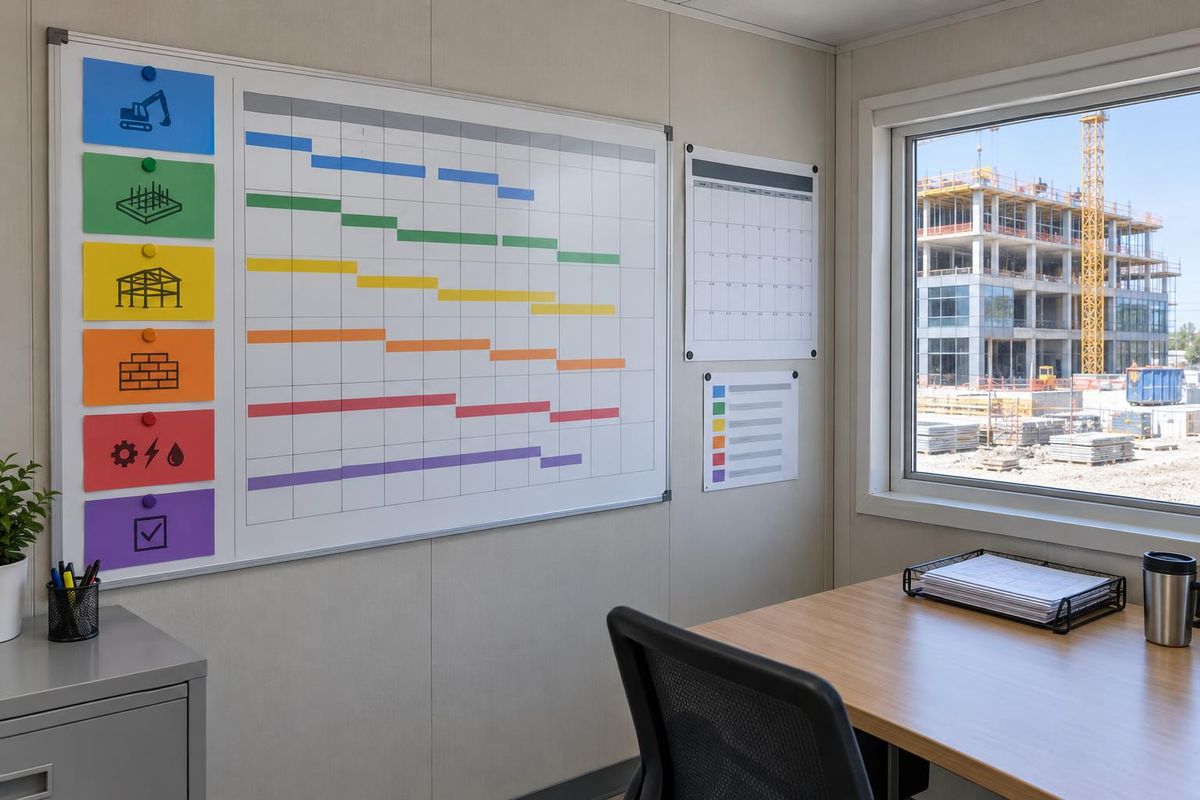
Rent often begins on a set date or a number of days after delivery, whether or not you are open. Compare the construction schedule to that date before you sign.
If the schedule is tight, ask for more build-out time or an earlier delivery in the lease.
Quick answers
Is a TI allowance paid up front?
Usually it is paid after the work is complete and documented, though terms vary.
Can I choose my own contractor?
Often yes, sometimes from an approved list. Check the lease.
What if the work runs past the rent start date?
You may owe rent on an unfinished space. Negotiate the dates early.